Inspector
Sees the sites assigned to them, files inspections in the field with or without signal, attaches photographs, and can produce a PDF of their own record when asked for one.
Inspections filed on the phone at the site — with no signal if that is what the barangay gives them — carrying their photos, their reference number and the name of the officer who approved them.
Or call +63 917 578 6060 — you will get a person, not a queue.
Built in the Philippines by XYPES Technologies. First organisations onboarding from October 2026.
InspectPH
Inspect smart. Serve better.
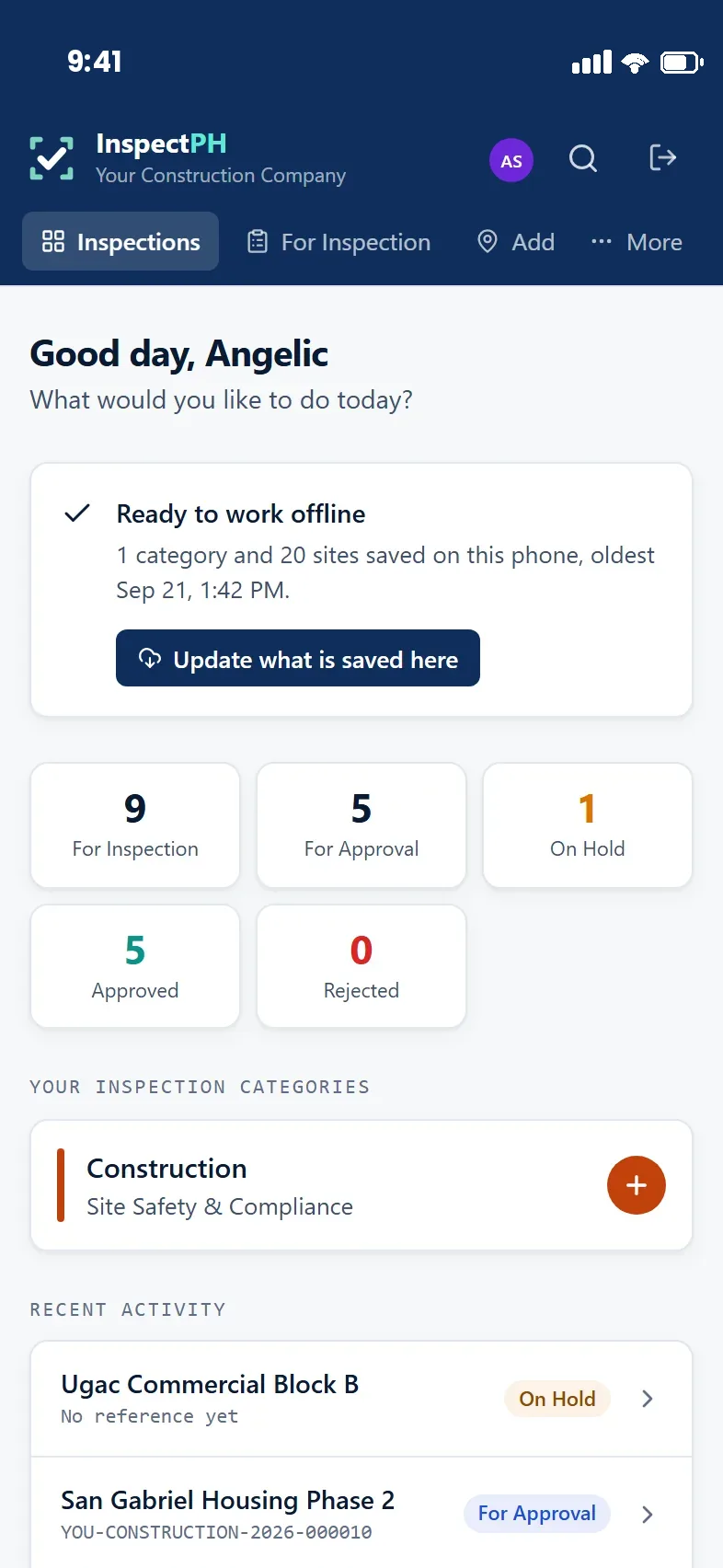
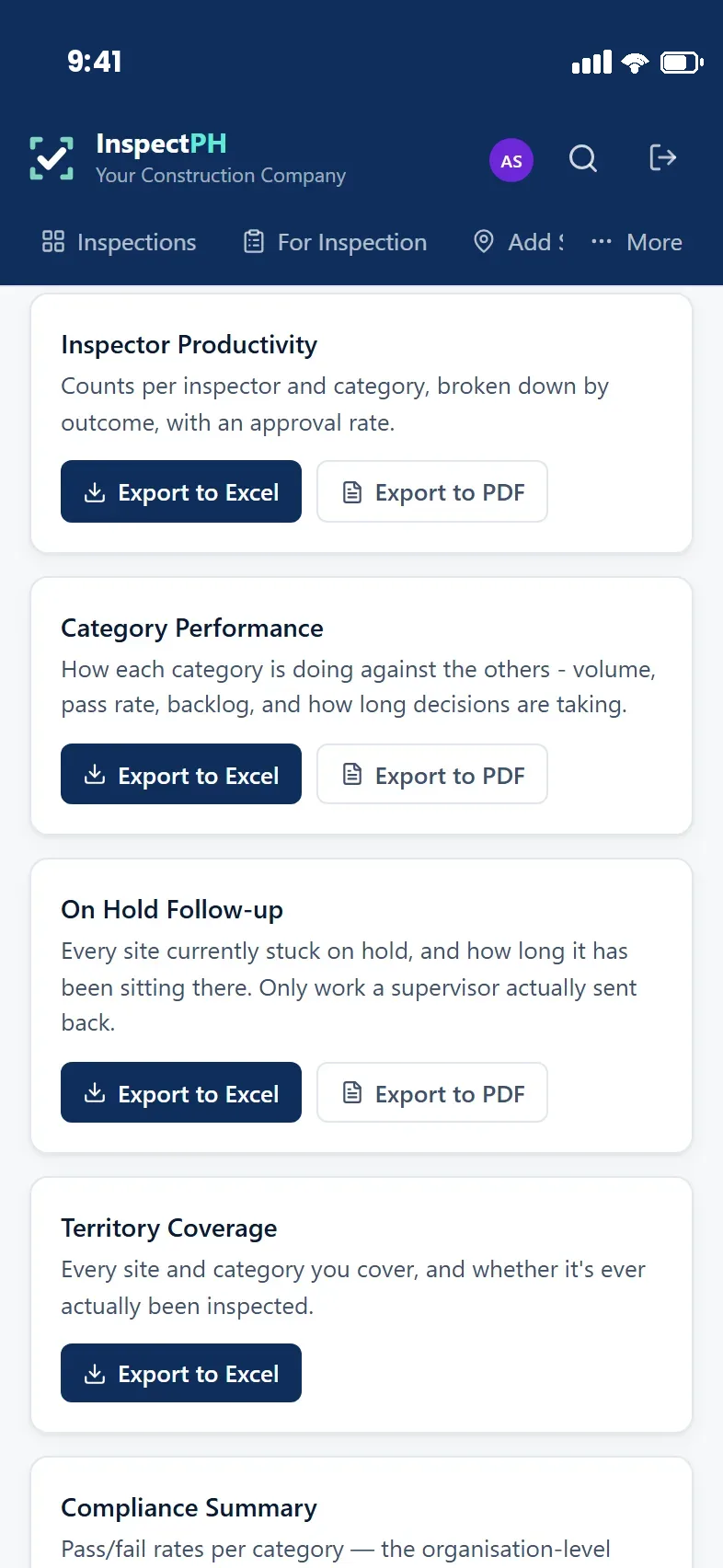
An actual screen from the app, at the size it is on the phone.
No tablet to buy, no laptop in the field, nothing to install from a shop. It opens like a website and saves to the home screen like an app.
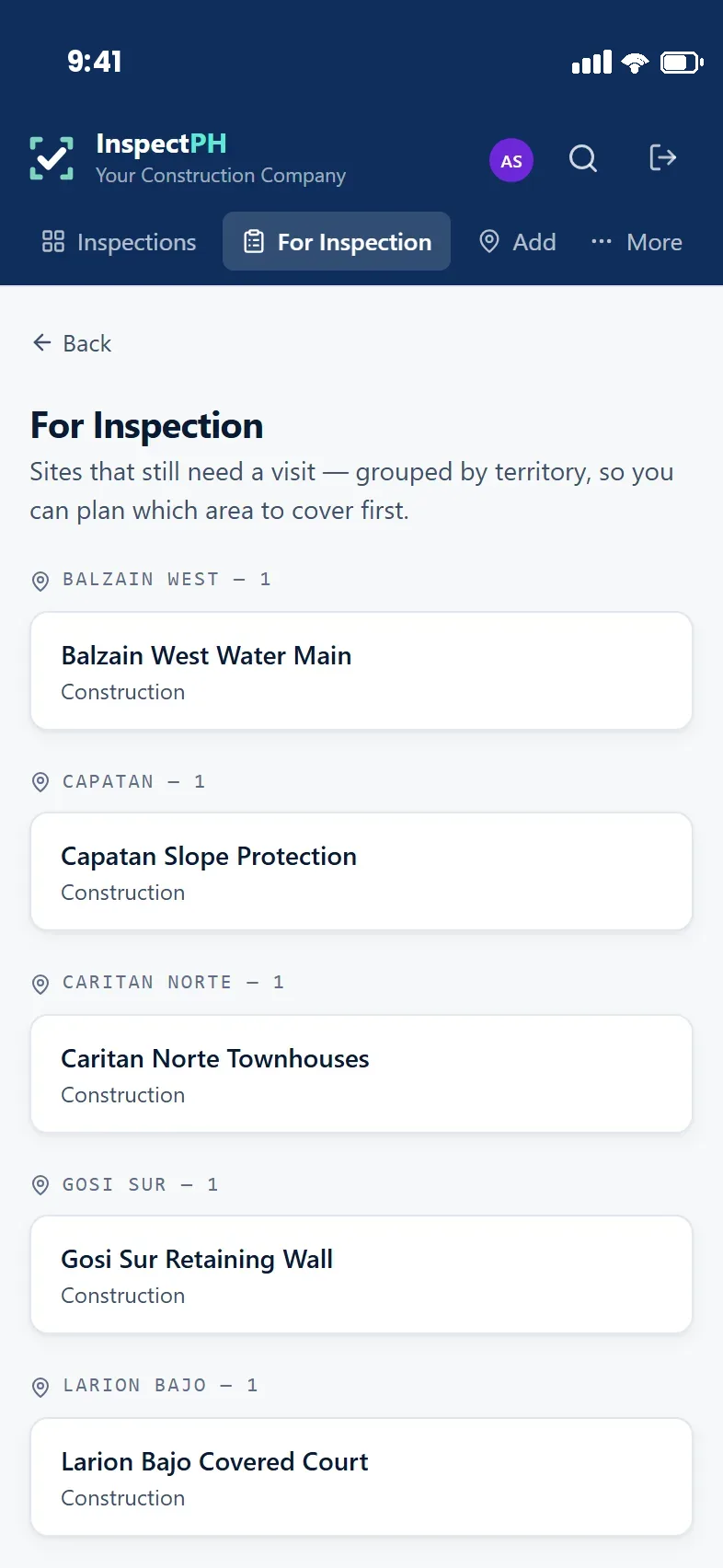
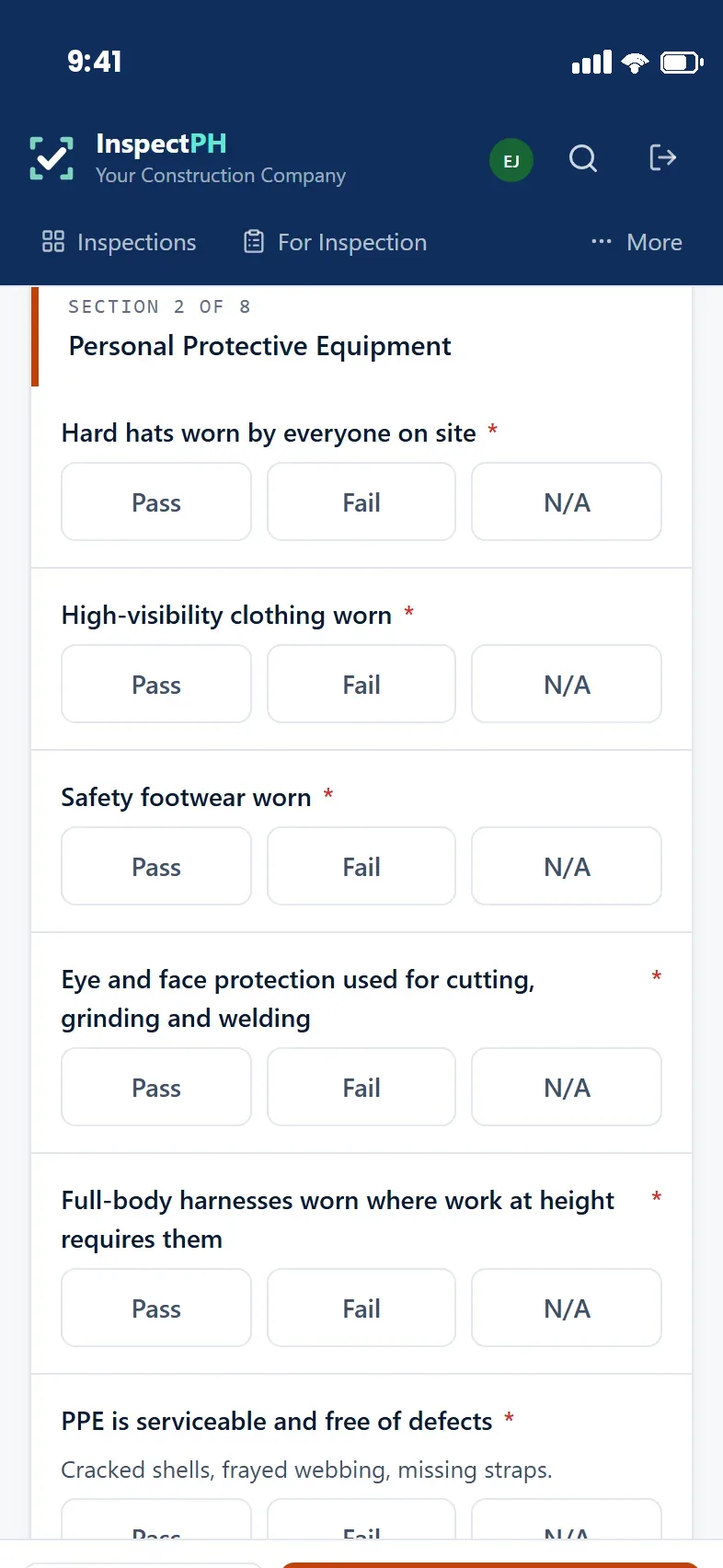
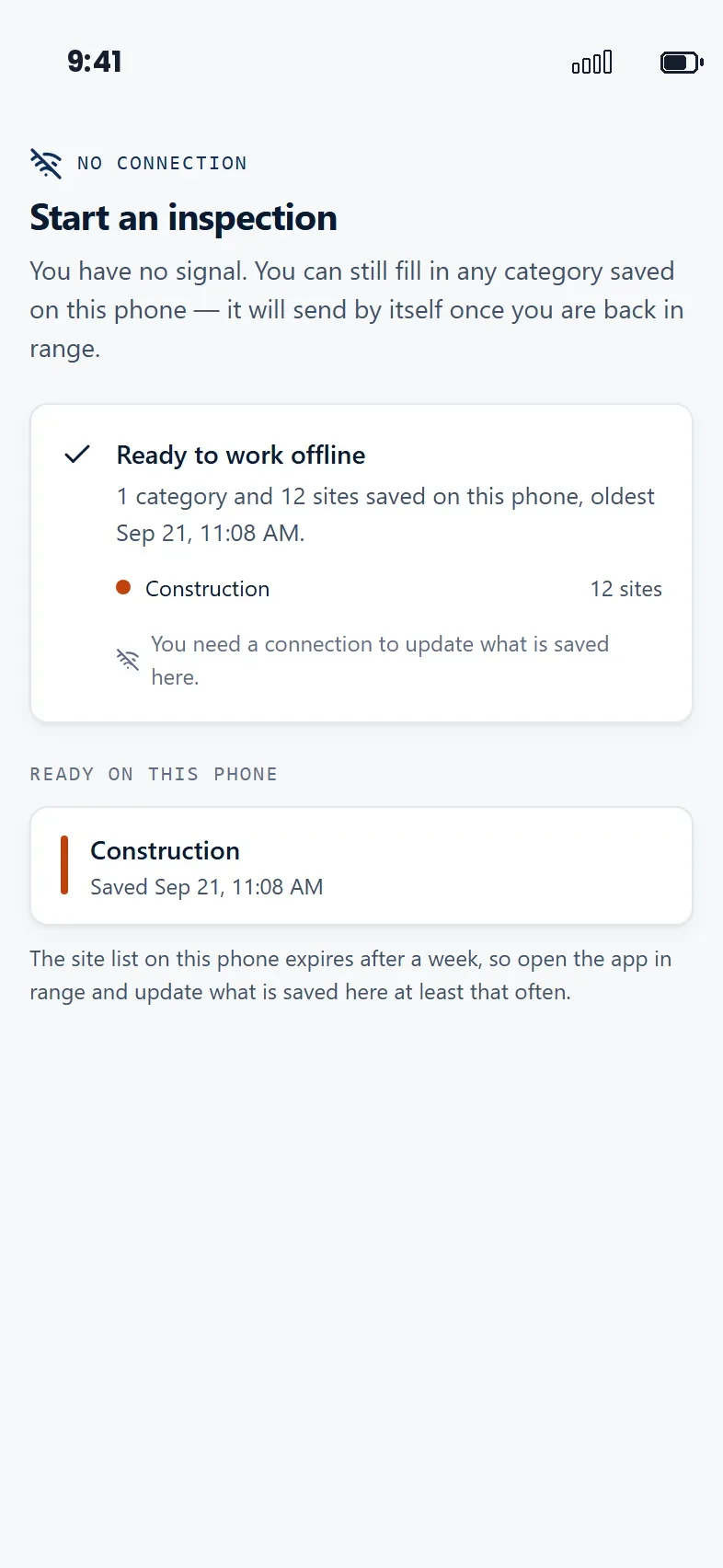
Most inspection software assumes a connection and fails quietly without one — the form will not open, and the inspector goes back to paper. InspectPH keeps the assigned categories, their forms and their site lists on the phone itself.
The hard part is everything around it — and almost all of it is copying, matching and re-typing work that was already done once at the site.
The visit itself does not get shorter — an inspector still has to walk the premises and look. What disappears is the second and third handling of the same information.
The bars above illustrate a typical paper workflow. They are not pilot results, and we will not quote a percentage we have not measured — the point of the pilot below is to produce that number for your own office, from your own inspections.
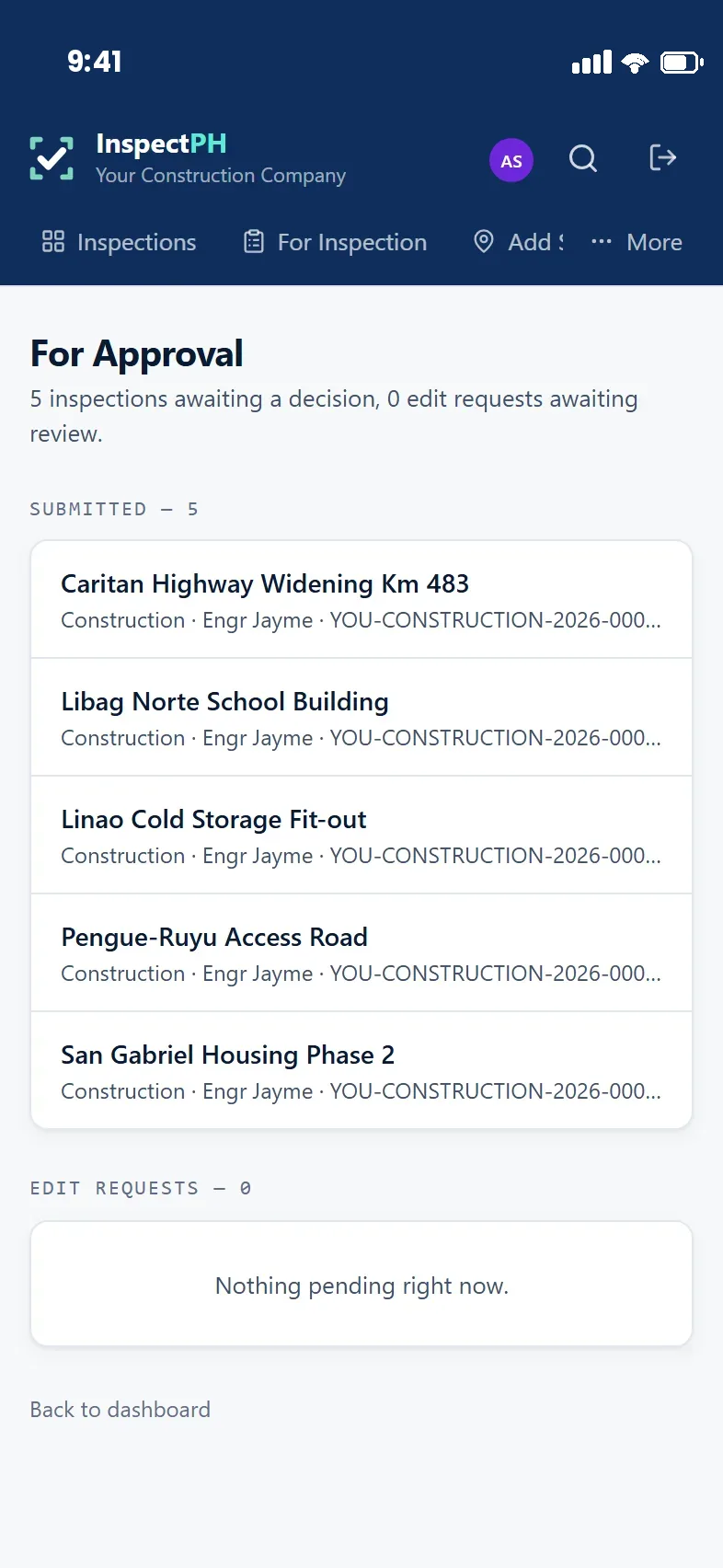
No one prepares a status for you. What is waiting, what is overdue, who filed it and what they found is on the first screen — updated the moment an inspector submits, not at the end of the month.
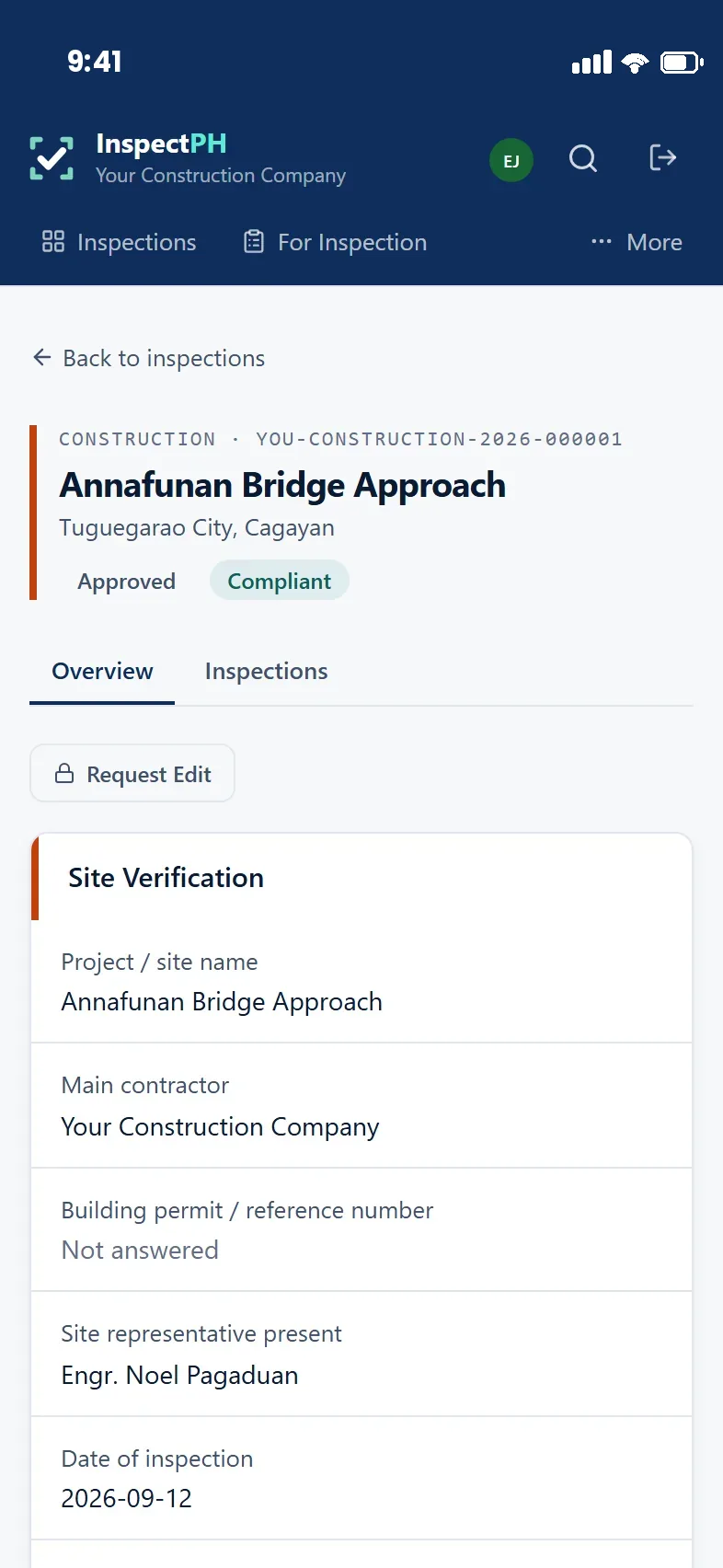
Every submitted inspection carries the same five things, whether it was filed this morning or last year.
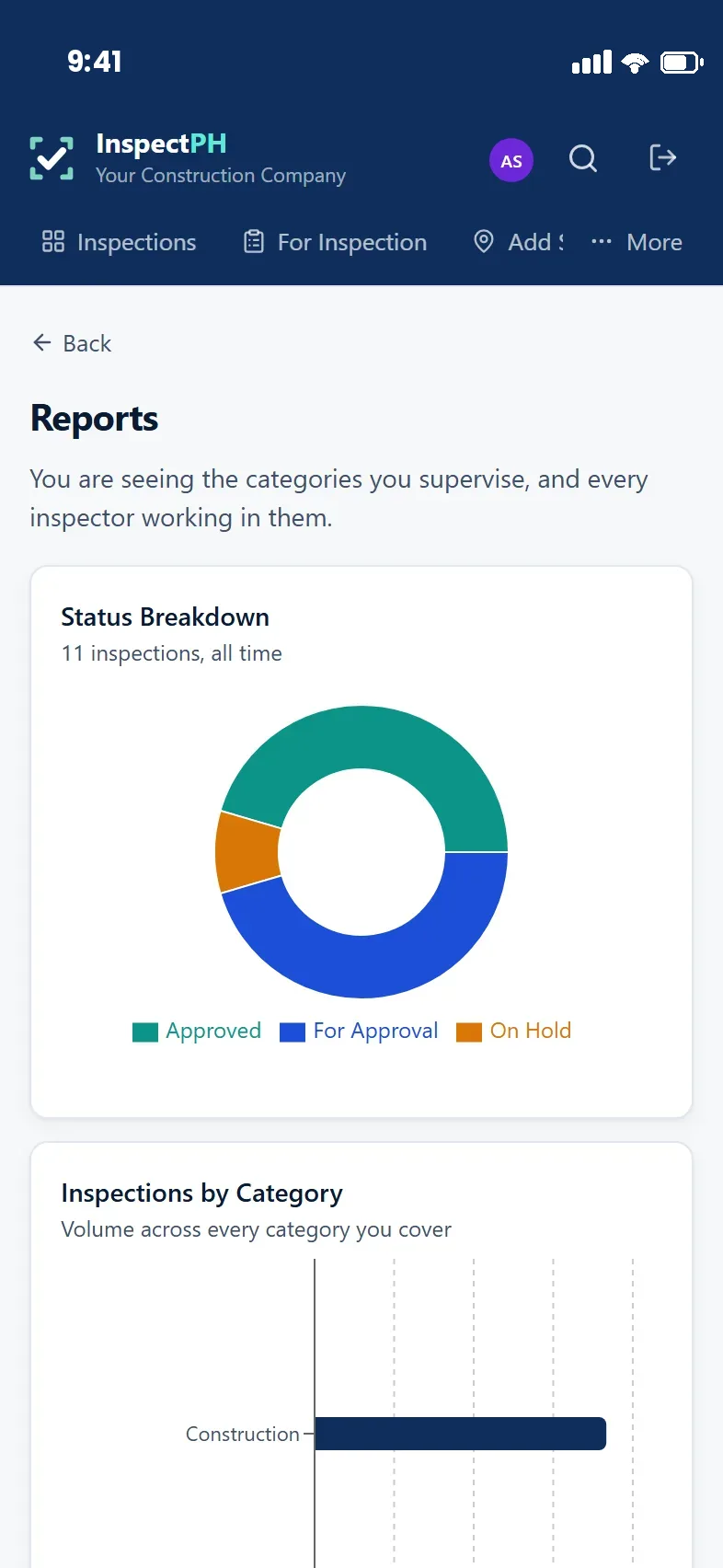
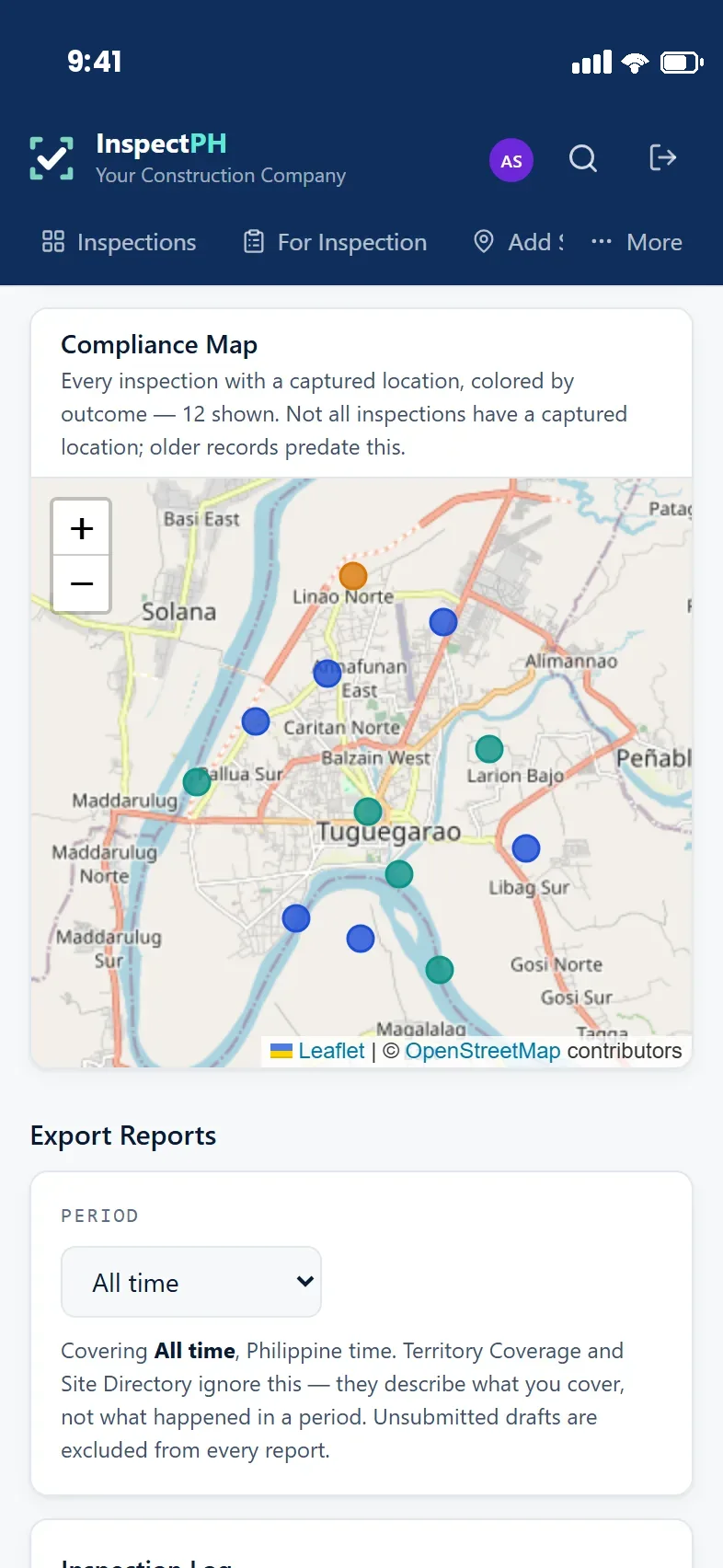
Compliance, backlog, coverage, inspector productivity and category performance — as Excel to work with, or PDF to attach to a memo.
Very few of them know what a barangay is, what a reference series has to look like to survive an audit, or what the Data Privacy Act asks of any organisation holding records about people. A city health office and a construction firm hit the same three walls. That gap is the product.
Addresses are chosen from the official PSGC list — all 42,024 — rather than typed. One barangay does not become four spellings across four inspectors.
Each organisation, category and year keeps its own run. A number is issued on submission, so an abandoned draft never leaves a gap — and a gap is what an auditor asks about, whether the file is a permit or a project record.
A published privacy policy, a processing agreement to sign, a public route for anyone to exercise their rights under Sections 16–18, and a declaration before a form collecting sensitive personal information can be published at all. The Act binds a private company exactly as it binds an agency.
Who filed it, who decided it, when, and what changed — recorded as it happens and not editable afterwards. Staff can read the entries about themselves, which is their right under the same law.
Assigned categories and site lists stay on the inspector's phone. An inspection started in a barangay with no coverage saves locally and sends itself once the phone is back in range.
Nothing here is ever published. Access is enforced in the database itself rather than by the screens: an inspector sees their own work, a supervisor their categories, an administrator their own organisation — and no organisation sees another one at all.
Inspection is not a project with an end date. It is a function that runs every year, against a list of establishments that keeps changing, staffed by people who move on.
Sites and barangays are loaded once — by spreadsheet if you already keep one — and assigned by territory and category.
The inspector opens their queue, picks the site, and fills your own form on their phone.
Findings, photographs and the capture location are saved together and submitted as one locked record.
The supervisor approves it or returns it with a note saying what to correct. Both outcomes are recorded.
Compliance, backlog, coverage and workload come out as Excel or as a PDF you can attach to a memo.
A department head should not have to learn an inspector's screen to find out whether the programme is on track.
Sees the sites assigned to them, files inspections in the field with or without signal, attaches photographs, and can produce a PDF of their own record when asked for one.
Assigns territories, reviews what comes in, returns work for correction with a reason, and sees the backlog by category rather than as one number.
Compliance rates by category, where failures concentrate, how long decisions are taking, and what is still unresolved — without asking anyone to prepare a report.
Not a roadmap. If it is listed here, it is built and running.
InspectPH begins its first pilots in October 2026. We are taking a small number of founding organisations, because the point of a pilot is that we can answer the phone when your inspector is standing at a site.
There is nothing to pay during your pilot. You are invoiced only if the department decides to keep it afterwards — which is the point of running one.
After that, InspectPH is billed as a monthly service subscription per department, with a seat allowance rather than a charge per inspector — adding a casual inspector for a permit rush should not cost you anything, and it certainly should not push your staff into sharing one login.
Most subscribers prefer to be invoiced annually in advance, against a document they can attach to a disbursement voucher or a purchase order. We can quote either way.
We are not able to advise on how you procure — if you are a government office that is your BAC's call, and if you are not, it is your own. We can provide a written quotation in whatever form your office or finance team needs.
InspectPH is built and supported by XYPES Technologies, a software company in the Philippines. We are not a reseller of somebody else's platform, and there is no overseas support desk — the people who wrote it are the people who answer.
If your office is considering this, the useful next step is a conversation about what your inspectors actually do today. Call or email and we will arrange a time.
Tell us which office and what it inspects. If InspectPH is not a fit for how you work, we would rather say so early than sell you a subscription you stop using.